Signs your toilet needs a plumber
Most toilet complaints start with one of these symptoms.
- It runs after the flush.
Water keeps trickling into the bowl or the tank refills every few minutes. A worn flapper or a stuck fill valve is the usual cause.
- Water pools around the base.
A failed wax ring, a loose closet bolt or a cracked flange lets water seep out at the floor.
- It wobbles or rocks.
A loose toilet has already stressed its seal, even if the floor is still dry.
- The handle feels loose or sticks.
A broken chain or lift arm inside the tank stops the flush.
- It gurgles or backs up.
If other drains in the house slow down too, the blockage may be past the toilet.
- It flushes weakly.
Mineral buildup under the rim or low tank water can cut the flush.
Running toilet: finding the leak in the tank
A running toilet is the most common call, and it wastes water without any visible mess. Drop a few drops of food coloring in the tank and wait fifteen minutes without flushing. If color shows up in the bowl, the flapper is leaking.
If the water rises to the top of the overflow tube and keeps running, the fill valve is not shutting off. Both parts are inexpensive and many homeowners replace them, but older tanks sometimes have corroded bolts or hard-to-find parts that make a full toilet replacement the better choice.
Missouri American Water's 2023 report shows total hardness of 66 to 150 ppm at its Meramec River plants and 82 to 226 ppm at its Missouri River plants. We cannot tell which plant feeds your address. Mineral scale on a fill valve is more common in hard water, so if parts keep failing, test your tap.
Repair or replace the toilet?
The age of the toilet and the cause of the problem decide this. Here is how we usually weigh it.
| Problem | Usual fix | When replacement makes more sense |
|---|---|---|
| Constant running | New flapper or fill valve | Tank is cracked or parts are discontinued |
| Leak at the base | New wax ring, reset bolts | Bowl or tank has a hairline crack |
| Rocking toilet | Reset, shim or repair flange | Subfloor is soft or stained |
| Frequent clogs | Auger and test flush | Older high-volume model that never flushes well |
| Weak flush | Clean rim jets, adjust water level | Tank design cannot be fixed |
Cracked porcelain cannot be repaired. Water between the tank and bowl or from the bowl itself means replacement.
When a toilet leak or overflow is an emergency
Treat it as urgent if the toilet is overflowing and the water will not stop, if water is leaking through a ceiling below, or if sewage is rising from the bowl. Shut the supply valve behind the toilet and, for an overflow, lift the tank lid and press the flapper closed.
Keep children and pets away from the floor, since sewage carries bacteria. Do not run the washing machine or other fixtures if the home drains to the same line. Take photos of the damage for your insurer or landlord, because your policy decides what is covered.
Night and weekend calls are routine for us, and same-day appointments are offered when available. The sooner we shut off the source, the less water reaches the subfloor.
Toilet overflowing right now?
Call the 24/7 line. We can talk you through the shutoff while a plumber heads your way.
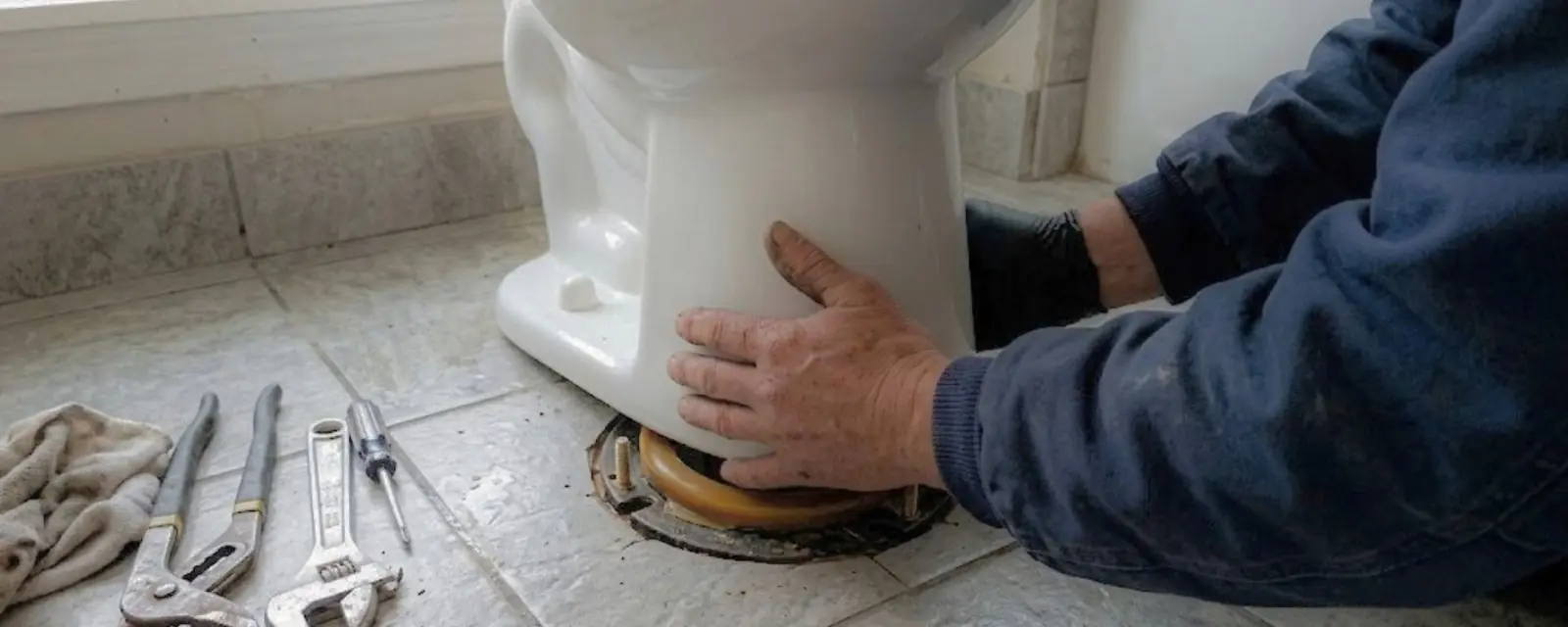
Wax ring and flange: what holds a toilet to the floor
A toilet sits on a flange, a ring fixed to the floor over the drain pipe. A wax ring, or a modern wax-free equivalent, forms the seal between the toilet and the flange. If the flange is cracked, rusted or sitting below the finished floor, a new ring will not hold.
That is why we lift the toilet before promising a fix. If the flange is damaged, we repair or replace it. If the subfloor has softened from a slow leak, it may need repair first, and a moisture meter helps us see how far the water went.
Planning a new toilet installation
Replacing a toilet is a good time to choose a better one. Look for the EPA WaterSense label, which means 1.28 gallons per flush or less. Measure the rough-in, the distance from the wall to the center of the flange, because it limits which models fit.
A few other choices matter: round or elongated bowl, height, and whether the tank bolts to the bowl. Tell us what you picked, or ask us to bring options.
St. Louis County guidance has said a plumbing permit is required to replace or reset sinks and water closets. That county flyer is dated 2013, so confirm current rules with the building department before work starts. We can tell you what we need for the job.
Gurgling toilets in homes on private sewage systems
The city's Master Plan says much of Wildwood's soil is unsuitable for individual septic systems, and that some subdivisions use package treatment plants. If your home is not on MSD sewer and several fixtures gurgle or back up, the cause may be a full tank or a drain field problem, not the toilet. We can check the toilet and tell you when to call your septic or treatment service. For lines on public sewer, see our sewer line repair page.
What affects the price of toilet repair
Simple parts cost little and full replacements cost more. These factors set the range.
A flapper or fill valve is a quick repair, a flange or subfloor repair is not.
Old tanks may need parts we cannot source, which pushes toward replacement.
Soft or rotted subfloor adds carpentry before the toilet is set.
A stuck or leaking supply valve may need replacing first.
After-hours calls cost more than a scheduled visit.
Sudden overflow or supply line failure may be covered, but slow leaks at the base often are not. Your policy decides, so photograph the damage before cleanup.
For a clear price before work starts, call our line and describe the toilet.
What a toilet repair visit involves
- 1
Shut off and inspect.
We close the supply, check the valve, supply line and tank parts, and look at the floor around the base.
- 2
Lift if needed.
For base leaks or rocking, the toilet comes up so we can see the flange and old ring.
- 3
Repair or replace.
You get a price first. Then we set the toilet on a fresh seal and torque the bolts evenly.
- 4
Test.
We flush several times, check for seepage and confirm the fill level.
Questions we hear in Wildwood, MO
Yes. Our line is open 24/7 for overflows, base leaks and failed supply lines. Same-day appointments are offered when available for repairs that can wait a few hours.
A flapper that does not seal lets tank water slip into the bowl, so the fill valve kicks on to refill it. A food coloring test in the tank will show it. The part is usually inexpensive, though a worn tank may call for replacement.
It seals the toilet to the flange on the floor so water and sewer gas stay in the pipe. When it fails, you may see water at the base or smell sewage.
If the problem is a worn internal part, repair is usually right. Cracked porcelain, discontinued parts or a toilet that never flushed well are reasons to replace.
St. Louis County guidance has said a plumbing permit is required to replace or reset water closets, but that flyer dates from 2013. Confirm current rules with the building department.
If only that toilet clogs, the trap or bowl may be the issue. If tubs and sinks also drain slowly, the line is likely partly blocked, and drain cleaning is the next step.
Yes. We work across Wildwood and nearby towns including Ellisville and Chesterfield.
Have a question this page did not answer? Call (855) 575-2890 at any hour and a dispatcher will talk it through.