Signs the clog is in one drain or in the main line
Where the water misbehaves tells a plumber where the blockage sits, and it changes the tool and the time needed.
- One fixture is slow.
A single sink or tub that drains slowly while everything else works usually has a clog in its own trap or short branch pipe.
- Gurgling after a flush.
Air is being pulled past a partial blockage, often in the line shared by a bathroom group.
- The lowest drains go first.
A basement shower or floor drain that bubbles when an upstairs sink runs points at the main drain.
- The washer fills the tub.
When washing machine water shows up in a tub or shower, the shared line downstream of both is blocked.
- Several toilets will not clear.
Two or more fixtures struggling at once is rarely a toilet problem. Treat it as a main line clog.
When a clogged drain cannot wait until morning
Call right away if sewage or gray water is coming up through a tub, shower or floor drain, if more than one toilet will not flush, or if water is spreading toward finished flooring or electrical outlets. We dispatch around the clock for these. A slow sink with no water on the floor can usually be booked as a same-day appointment when available.
While you wait, stop using every fixture on the blocked line, including the dishwasher and washer. Keep children and pets out of standing water, stay away from wet outlets, and photograph the water line for your insurer or landlord.
Kitchen sink drains that back up
Kitchen lines clog differently from bathroom lines. Cooking grease cools inside the pipe and narrows it a little with every dishwashing cycle, and food scraps catch on that coating. The sink drains slower each month until one evening it stops.
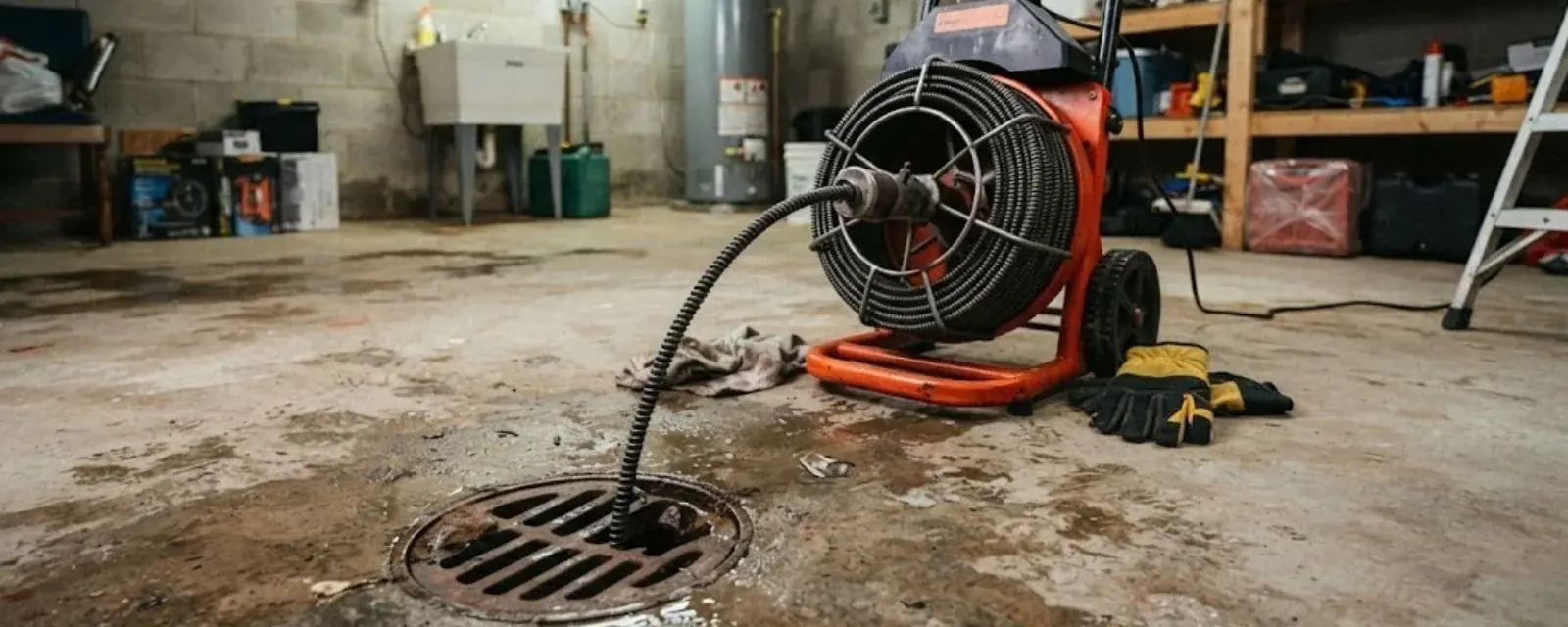
A common pattern is a kitchen sink that backs up into the laundry sink. That tells us the blockage sits past the point where those two lines join, so clearing the trap under the kitchen sink will not help. The cable has to go in through a cleanout or the laundry standpipe and travel past the junction.
If a disposal feeds the sink, we check whether the clog sits in its outlet or deeper in the line. A jammed unit is a repair job, so our disposal repair service covers that side. When the same line clogs twice in a year, ask about scouring it with hydro jetting after the cable work.
Why drains clog in Wildwood homes
Wildwood sits in what the city's own Master Plan calls the rolling and hilly woodlands of the Ozark foothills, and many lots keep mature trees close to the house. Roots are the usual outside cause of a slow main drain. They find a joint, enter as hair-thin threads, and thicken into a mat that catches paper and grease.
The housing numbers explain how long those roots have had to work. The Census ACS for 2020 to 2024 lists a median build year of 1992 for Wildwood, with about 42.8 percent of homes built before 1990. Landscaping from those years is now decades old, so a house that drained fine for 25 years can start clogging when roots finally reach a joint.
Where you drain matters too. Many Wildwood homes, especially west of Highway 109, are not on public sewer. Some use a private septic system or a shared package plant, and others connect to MSD Project Clear. Tell us which you have, and we will also check pipe material by camera in older cores like Grover and Pond rather than guess.
Septic or package plant? Skip the caustic drain products
Lye and acid drain openers can harm the bacteria that break down solids in a septic tank, and the dose that passes through lands in a drain field or a shared plant that was never designed to receive it. They also sit in standing water above the clog, where they splash onto skin when a plumber opens the line.
A cable removes the blockage without that cost. If you are on a private system and a drain keeps backing up, mention it when you call, because a full tank or a failing field can mimic a clog.
Cable, drain machine or hydro jet: matching the tool to the clog
The cheapest tool that fully clears the pipe is the right one. This table shows how we usually decide.
| Situation | Usual approach | Why it fits |
|---|---|---|
| One sink or tub, soft clog | Hand or small drum cable | Reaches the trap arm and short branch without opening anything |
| Kitchen line coated with grease | Cable first, then jetting if it repeats | Cable opens a channel, water pressure strips the wall |
| Main drain with roots | Larger cable with a cutting head | Cuts the root mass back to open pipe |
| Clog returns every year or two | Camera, then jetting | Footage shows why it returns before you pay to clear it again |
| Floor drain or washer standpipe | Cable through the nearest cleanout | Keeps the work away from fixtures and finished surfaces |
| Septic-served home | Cable to the tank, no chemicals | Protects the tank bacteria and avoids flooding the system |
Pipe condition decides everything. A camera view can change the plan in minutes.
Water backing up while you read this?
Our 24/7 line reaches a licensed plumber who can talk you through the first steps and book the truck.
Shower drains, leaking drain lines and yard drains
Tub and shower drains clog with hair and soap film, usually within a foot or two of the opening. A cable and a pulled stopper clear most of them quickly.
A leaking drain line shows as a stained ceiling under a bathroom or a damp basement wall. If we suspect a leak rather than a clog, our leak detection work finds where the water goes before anyone opens a wall.
Yard and driveway drains carry rainwater rather than household waste, and they clog with leaves and silt. They follow different rules from the sewer, so the details sit with sewer line cleaning.
What a drain call looks like
- 1
Trace the first wet or slow fixture.
We ask which fixtures misbehave and in what order, then look at the lowest drain in the house.
- 2
Open a cleanout or pull the trap.
Working from the nearest access keeps the mess small and puts the cable closest to the blockage.
- 3
Run the cable and feel the resistance.
Soft resistance suggests grease or paper. A hard stop at a set distance suggests roots or a joint, and we tell you which we found.
- 4
Flush every fixture before we leave.
We run the sink, tub, toilet and washer on the line to prove the flow, then tell you if a camera or jetting visit is worth scheduling.
What affects the price of drain cleaning
We do not publish a flat number because the pipe, not the problem name, sets the work. You get a clear price before work starts.
A trap arm under one sink takes far less time than a blockage 60 feet down the main.
A usable cleanout keeps the job simple. Without one, we may have to pull a toilet or work through a roof vent.
A hand cable, a larger drum machine and jetting equipment carry different time and cost.
Grease, hair and paper clear quickly. Roots or a damaged joint mean repeat visits or a repair.
After-hours and weekend dispatch differs from a same-day daytime appointment, and you hear the difference before you agree.
Home insurance rarely pays for a routine clog, since slow buildup is treated as maintenance. A sudden sewage backup may be covered only if you carry a water backup endorsement, so your policy decides.
For a real number on your drain, call our 24/7 line and describe the symptoms.
Beyond Wildwood city limits
We also take drain calls in neighboring Ballwin and Ellisville, where each city runs its own sewer lateral repair program. If a drain keeps clogging after repeated cabling, the next step is a camera look at the line, which our sewer inspection visit provides.
Questions we hear in Wildwood, MO
Yes. Our 24/7 dispatch covers nights, weekends and holidays for backups, overflowing floor drains and multiple clogged fixtures. Call the emergency line and tell the dispatcher which fixtures are affected.
Slow drains that are not flooding anything are usually booked as same-day appointments when available.
We advise against it. Chemicals sit on the clog, can burn skin during the cable work, and harm the bacteria in a septic tank or a shared treatment plant. Plain hot tap water and a pause on water use are safer while you wait.
The two lines share a pipe downstream of where they join, and the blockage sits past that point. Clearing the kitchen trap will not help, so the cable has to enter through a cleanout or standpipe and pass the junction.
It does. We avoid caustic products, work with a cable first, and watch for signs that the tank is full or the field is saturated. Soils in much of the city are unsuitable for individual septic systems, according to the city's Master Plan, so repeated backups deserve a closer look.
Usually the first visit removed the plug but left the coating or the cause, such as grease film, roots at a joint or a belly in the pipe. A camera shows which one it is, and the fix may be jetting or a repair.
Have a question this page did not answer? Call (855) 575-2890 at any hour and a dispatcher will talk it through.