Start with the clog's address, not a recipe
A blockage near the fixture is a different problem from one in the branch line or the main. If only one drain is slow, the plug is close, and you can reach it. If the tub, the washer standpipe and a floor drain all misbehave together, the clog is shared and no kitchen recipe will touch it.
Do a quick test before anything else. Run water in each sink, flush each toilet once, and note which fixtures gurgle or drain slowly. That map tells you whether to grab a plunger or to put the tools away.
Kitchen sink: grease, food and the P-trap
Kitchen clogs are mostly cooking fat, coffee grounds and starch. Start with a flat-bottom cup plunger. Block the second basin or the dishwasher air gap with a wet rag, fill the sink with a couple of inches of water, and plunge with firm, steady strokes for about twenty seconds.
If that fails, clean the trap. Put a bucket under the U-shaped pipe, loosen the two slip nuts by hand or with channel locks, and empty it. Rinse the trap and the short pipe stub into the wall. Reassemble with the washers seated, run water, and check every joint for drips.
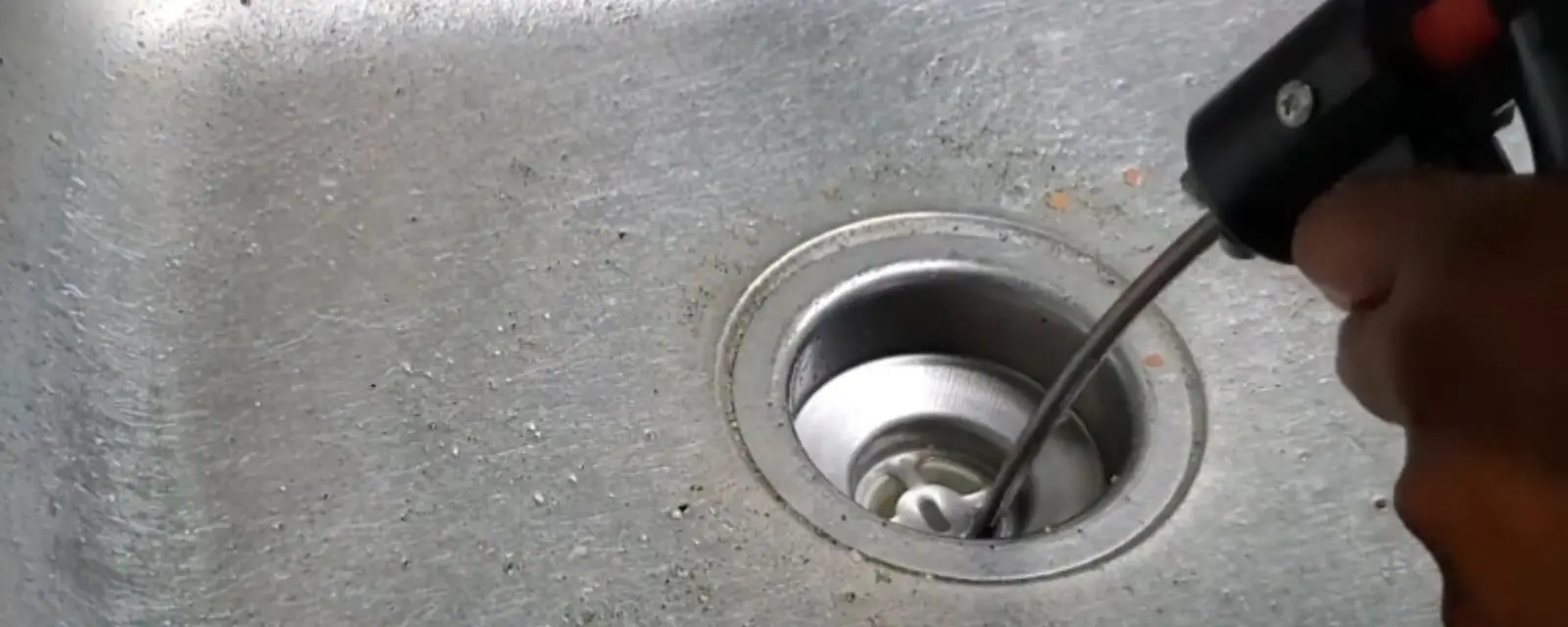
A hand auger comes next, fed through the wall stub and cranked until it meets resistance. A little dish soap and warm water helps cut a fresh grease film, but it will not remove a hardened plug. When the plug is farther down, a cable machine from a professional drain cleaning visit reaches what a homeowner's auger cannot.
Bathroom sink and tub: hair and soap scum
A bathroom sink usually clogs at the pop-up stopper. Many pivot rods unscrew behind the tailpiece under the sink, so the stopper lifts out, and you can wipe the hair mat straight off it. A plastic barbed drain tool, run down the opening and pulled out slowly, brings up hair a plunger cannot.
Tubs and showers hide the same wad under the strainer or in the overflow cover. Remove the strainer screws, pull what you can, then plunge with the overflow opening held shut by a wet cloth so the pressure goes down the pipe. If the hair is far down, a small auger or a bent pull tool reaches it.
Toilet: plunger first, auger second
Use a flange plunger, the kind with a rubber sleeve that fits into the drain, and seal it fully before pushing. Push gently the first time to purge trapped air, then pump with force for fifteen to twenty seconds. Slow, deep strokes work better than quick jabs.
If water level drops and the bowl flushes, you are done. If it does not, a closet auger, a short cable with a bent tip designed not to scratch the porcelain, can reach the bend. Do not flush again while the bowl is nearly full, and shut the supply valve behind the toilet if the water keeps climbing. A toilet that backs up again within a day usually has a line problem, and a sewer camera inspection shows it.
Hot water: what each pipe material can take
Pouring boiling water down a drain is a popular homemade fix, and it is not safe for every pipe or fixture. Match the water temperature to what you can see under the sink.
| What you have | Safe water temperature | Caution |
|---|---|---|
| PVC or ABS plastic trap and drain | Hot tap water only | Boiling water can soften joints and warp the pipe |
| Chrome-plated brass or copper trap | Hot tap or very hot water | Do not pour boiling water into a hot sink basin on top |
| Cast iron stack in an older home | Hot or boiling water is tolerated | It will not remove a solid plug |
| Porcelain toilet bowl | Warm tap water only | Boiling water can crack the bowl |
| Stainless steel kitchen sink | Hot tap water | Thin metal and a plastic trap below still need care |
If you cannot tell what the drain pipe is made of, use hot tap water and no more.
Products and tricks that cause more trouble than they fix
A few popular ideas are best left alone.
- Mixing two drain products.
Bleach, ammonia, acid and lye-based cleaners can release dangerous gas or heat when combined, even in small amounts. Pick one method and rinse the line with water in between, or skip chemicals.
- Pouring chemical cleaner into standing water.
The liquid sits in the basin and will splash back on the next person with a plunger. If a chemical was used, tell the plumber.
- A coat hanger or a wire in the trap.
It can scratch the pipe or push the plug deeper.
- Flushing wipes labeled flushable.
They do not break up like paper and often lodge in the first bend or the main.
- Using a plunger after chemicals.
The splash can burn skin or eyes. Wear gloves and eye protection if there is any chance of chemical residue.
When to stop and call a plumber
One plunger session and one trap cleaning are fair attempts. Past that, these signs mean the clog is not yours to reach.
| What you see | What it usually means | Next move |
|---|---|---|
| Two or more fixtures slow at once | Shared branch or main line blockage | Stop running water and call |
| Water rises in a tub or floor drain after you flush | Main line backing up | Keep people off the floor and call |
| Plunger and auger both fail on one drain | Plug is beyond reach or the pipe is damaged | Call for a cable or camera |
| Clog returns within a week | Roots, grease ring or a sag in the pipe | Ask for a camera look |
| Toilet overflows onto the floor | Full blockage or main line backup | Shut the toilet supply, mop, and call |
| Gas smell anywhere in the home | Not a plumbing clog | Leave and call Spire at 800-887-4173 or 911 |
Wildwood clogs and who owns the pipe
The City of Wildwood says sewer service is provided by MSD Project Clear and directs residents there for sewer problems. Many homes, especially west of Highway 109, are not on public sewer. If your clog is in the line leaving the house toward the street, you may be dealing with a sewer lateral, and nearby Ellisville tells its residents the homeowner is responsible for repairing a leaking or defective lateral.
An April 2023 city memo described the County Sewer Lateral Repair Program, noting a county fee of $28 to $50 per year under state law and an average repair cost of $3,330 cited by the county. The memo does not say whether Wildwood joined, so ask the city before you assume coverage. In Ballwin and Chesterfield, the city programs are documented and differ from each other, which is a reminder to check the address before you assume the rules apply.
Sources: city website FAQ, city website agenda memo, city master plan
Tried the plunger and the trap?
Tell us which fixtures are slow and what you already did, and we will say whether a cable, a jet or a camera fits.
Questions we hear in Wildwood, MO
A plunger and a cleaned P-trap solve most single-fixture clogs, and a hand auger solves many of the rest. They work by pulling or pushing the plug out, which no mixture can do for hair or hardened fat.
Not for plastic pipes or porcelain. Boiling water can soften PVC joints and crack a toilet bowl, so use hot tap water, and save boiling water for a cast iron line or a stainless sink with a metal trap.
Grease cools and coats the pipe wall, narrowing it until food catches. Keep fat out of the sink, scrape plates into the trash, and ask for a cable or hydro jet if it keeps coming back.
Remove the strainer, pull out the visible hair with a barbed plastic tool, then plunge with the overflow blocked. If standing water still drains slowly, a small auger reaches farther.
Only a closet auger, which is built with a protective sleeve for porcelain. A sink or tub cable can scratch the bowl and does not bend through the toilet trap well.
Only if more than one fixture is affected or the clog returns after a cleaning. If one sink is slow, the plug is usually near that fixture. If a basement drain backs up, stop using water and have the line camera-checked.
Light single-fixture clogs, yes. If water is rising in the lowest drain during heavy rain, stop using water and call, because a wet main line is a different job.
Have a question this page did not answer? Call (855) 575-2890 at any hour and a dispatcher will talk it through.