Is something wrong with the sewer line under my yard?
The usual signs are a drain that keeps clogging, a sewer odor in the basement or yard, gurgling toilets, a sunken or unusually green strip of lawn, and a cable that stops at the same distance each time. None of these proves the pipe is damaged. They are reasons to look instead of cabling again.
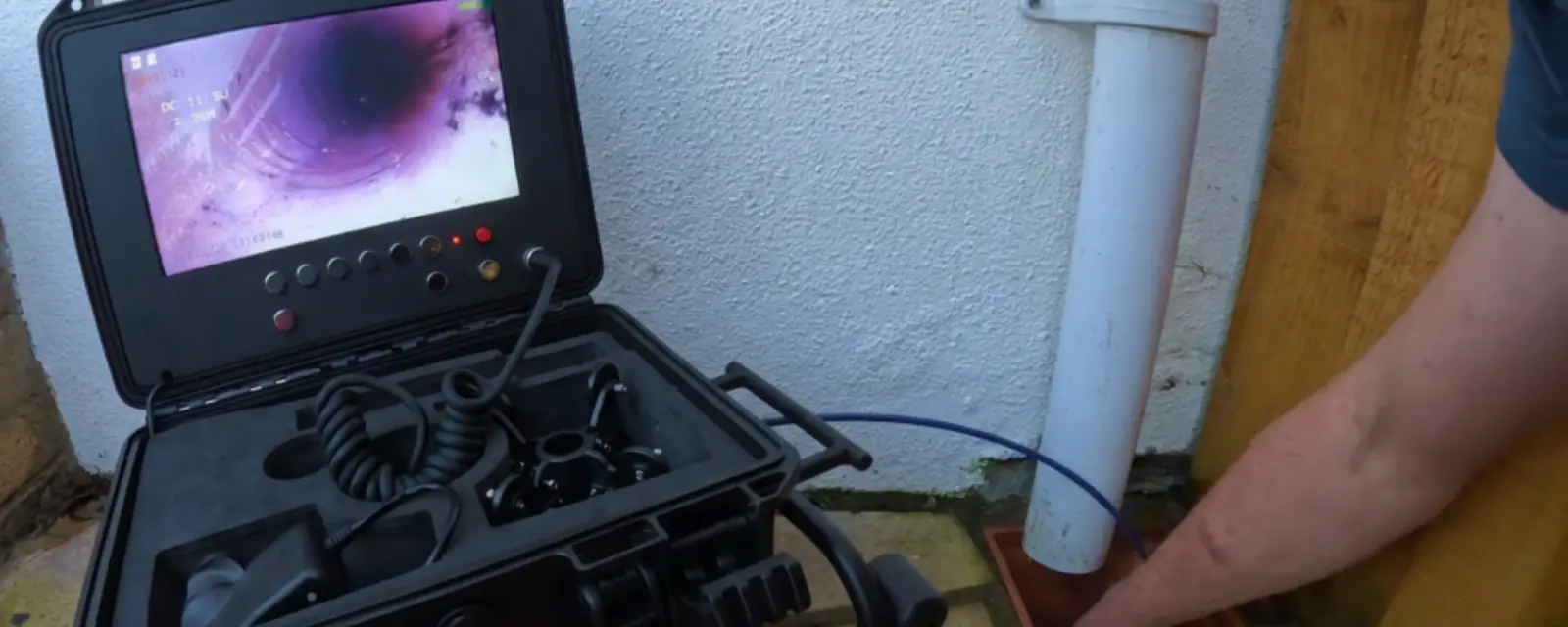
A camera inspection answers the question with a picture. It shows roots, cracks, offset joints, scale, a belly that holds water, or a clean pipe. If it is clean, you stop worrying. If it is not, you know what to fix and can compare the options before an emergency forces the choice.
What the footage can show
A good inspection report names what is visible and where it sits along the pipe.
- Roots.
Fine threads at a joint or a thick mat across the pipe. We note where and how heavy.
- Cracks and breaks.
Longitudinal or circular cracks, missing sections or a collapse, which move the job from cleaning to repair.
- Offset joints.
Pipes that no longer line up, catching paper and growing roots.
- Bellies.
Low spots that hold water and waste. They cause repeat clogs even when roots are absent.
- Scale and grease.
Rough buildup on the wall, common in iron pipe and kitchen lines.
- Material.
Cast iron, clay, plastic or another pipe, which affects the repair options.
What lies under Wildwood lots varies a lot
Wildwood covers 68 square miles, and the pipe under a lot depends on where it sits. Many homes, especially west of Highway 109, are not on public sewer. They use a private septic system or a shared subdivision package plant, as the city's Master Plan describes, while other homes connect to MSD Project Clear.
The age of the pipe varies too. Census ACS data for 2020 to 2024 lists a median build year of 1992, and about 42.8 percent of homes were built before 1990. Older cores such as Grover and Pond along Old Manchester Road may have older lines still. We never guess material from a street name and rely on the camera.
The camera covers the house line up to the tank or the main. It does not inspect the inside of a septic tank or the drain field, which belong to a septic contractor.
Sewer inspection before you buy a home
A home inspector looks at what is visible and rarely at the pipe underground. A sewer inspection during the buyer's inspection period can reveal root damage or a collapsed section that would otherwise become your bill after closing. Findings give you something concrete for repair requests or price talks.
If the home is on septic, tell us before the visit. We inspect the line to the tank, and the tank itself should be checked by a septic professional. The city's Master Plan describes a policy of septic inspections at sale, but we cannot confirm a current requirement, so ask the building department and the county what applies.
Be honest with yourself about timing. A camera result is a snapshot of the day we ran it, not a promise about the next ten years. For a house near mature trees, it is a good one-time investment.
Locating the line before you dig, fence or build
Locating means finding where the sewer line runs and how deep it is. We put a transmitter in the camera head, and a handheld receiver on the surface picks up the signal so we can mark the path on the ground. That helps when you are planning a deck, fence, patio, pool or new trees.
Wildwood's hilly Ozark-border lots make depth vary from one end of a line to the other. A line that sits shallow near the street may run deep at the house. We give you marks and depth readings and note the limits of the signal, which can be weaker on deep or iron pipe.
We mark plumbing lines only. Other buried utilities such as gas, electric and water are marked through the utility locate process before any excavation.
What the findings usually mean for your next step
After the footage, we explain what the result means in plain terms. This table shows the common outcomes.
| What the camera found | What it usually means | Typical next step |
|---|---|---|
| Clean pipe, good flow | The problem is local or temporary | No work on the main, watch the fixture that clogged |
| Light roots at a joint | Early intrusion that will return | Cutting or jetting, then a camera check again later |
| Heavy roots, cracked joint | Pipe damage as well as roots | Spot repair, lining or replacement |
| Belly holding water | Pipe has settled | Repair or replacement of the low section |
| Collapse or missing section | Line cannot carry waste | Excavation and replacement |
| Cable stalls, camera cannot pass | Blockage or collapse ahead | Clear the line first if possible |
Footage guides a decision. It is not a guarantee of how the pipe will behave in the future.
How an inspection visit goes
- 1
Find the way in.
We use an existing cleanout. If there is none, we may pull a toilet to reach the line.
- 2
Run the camera.
The camera travels the pipe while you or your agent watch the screen, and we record the footage.
- 3
Locate and mark.
We mark the path and depth of problem spots on the surface with paint or flags.
- 4
Explain and quote.
We go through what we saw, give you the video, and quote any cleaning or repair for approval before it happens.
Planning a purchase or a repeat clog?
Call to book a camera inspection. We can often schedule same-day appointments when available.
Inspection when the problem is already urgent
This page is for planned inspections. If sewage is backing up in the house right now, go to sewer line cleaning or call the 24/7 line, and we will camera the line after the flow is restored.
If a camera finds damage, sewer line repair covers the options. If it shows heavy buildup, hydro jetting may clear it. For a leak you cannot place, leak detection uses other tools in addition to the camera.
What affects the price of a sewer inspection
Camera inspections are priced by the visit, not by what we find. You get a clear price before work starts.
A short run with a clean cleanout takes less time than a long line with no access.
Marking path and depth on the ground adds time, especially on deep or hilly lots.
A blocked pipe has to be cleared before the camera can pass, which adds work.
A recorded video and written notes for a purchase negotiation take time to prepare.
Same-day visits when available can differ from planned appointments.
Insurance does not usually cover a routine inspection. If a covered event damaged the line, such as a sudden collapse, keep the footage, since your insurer may ask. Your policy decides.
To book or ask about price, call us and tell us if the home is on sewer or septic.
A note for owners in nearby towns
Neighboring Ellisville runs a city sewer lateral program in which a city contractor does a camera inspection before repairs are approved. If you own there, check those rules before booking privately, so you do not pay twice.
Questions we hear in Wildwood, MO
Drain cleaning removes a blockage. A sewer inspection records the pipe and shows why it blocked, whether through roots, a crack, a belly or buildup. Many homeowners schedule one after the second clog on the same line.
It is a good idea, especially on lots with mature trees or a house that appears older. The result is a snapshot, but it gives you real information for repair requests. If the home is on septic, tell us so we also point you to a tank inspection.
The time depends on line length, access and whether the pipe needs clearing first. We tell you what to expect when we book, and you are welcome to watch the screen during the run.
Yes, with a transmitter in the camera head and a surface receiver, we mark path and depth. Other buried utilities such as gas, electric and water must be marked through the utility locate process before any excavation.
No. It means the pipe was in good shape on the day we ran it. Roots, ground movement and pipe age can change that, so a repeat look makes sense if clogs return.
Yes, from the house to the tank. We do not inspect the inside of the tank or the field, and we tell you if the footage points toward them.
Roots enter at joints where moisture escapes, and in a wooded area like Wildwood they return unless the joint is repaired or lined. A camera shows how many joints are involved and which repair fits.
Have a question this page did not answer? Call (855) 575-2890 at any hour and a dispatcher will talk it through.