Gas smell? Stop reading and leave
If you smell natural gas at any point, leave the building right away. Do not flip switches, use a garage door opener, or light anything. From a safe distance, call Spire at 800-887-4173 or 911 before you call a plumber.
The job in order, from the cold water valve to the first hot tap
- 1
Shut off fuel and water.
Turn the gas control to off or flip the breaker for an electric unit, then close the cold water supply valve above the tank. Open a hot tap upstairs so the lines can drain and vent.
- 2
Drain the old tank.
Attach a hose to the drain valve and run it to a floor drain or outdoors. Sediment can clog the valve, so expect a slow drain and keep a bucket handy.
- 3
Disconnect and remove.
Disconnect the water lines, gas line or electrical whip, and the vent. A full tank is heavy even after draining, so plan for two people and a hand truck.
- 4
Set, connect, and vent the new unit.
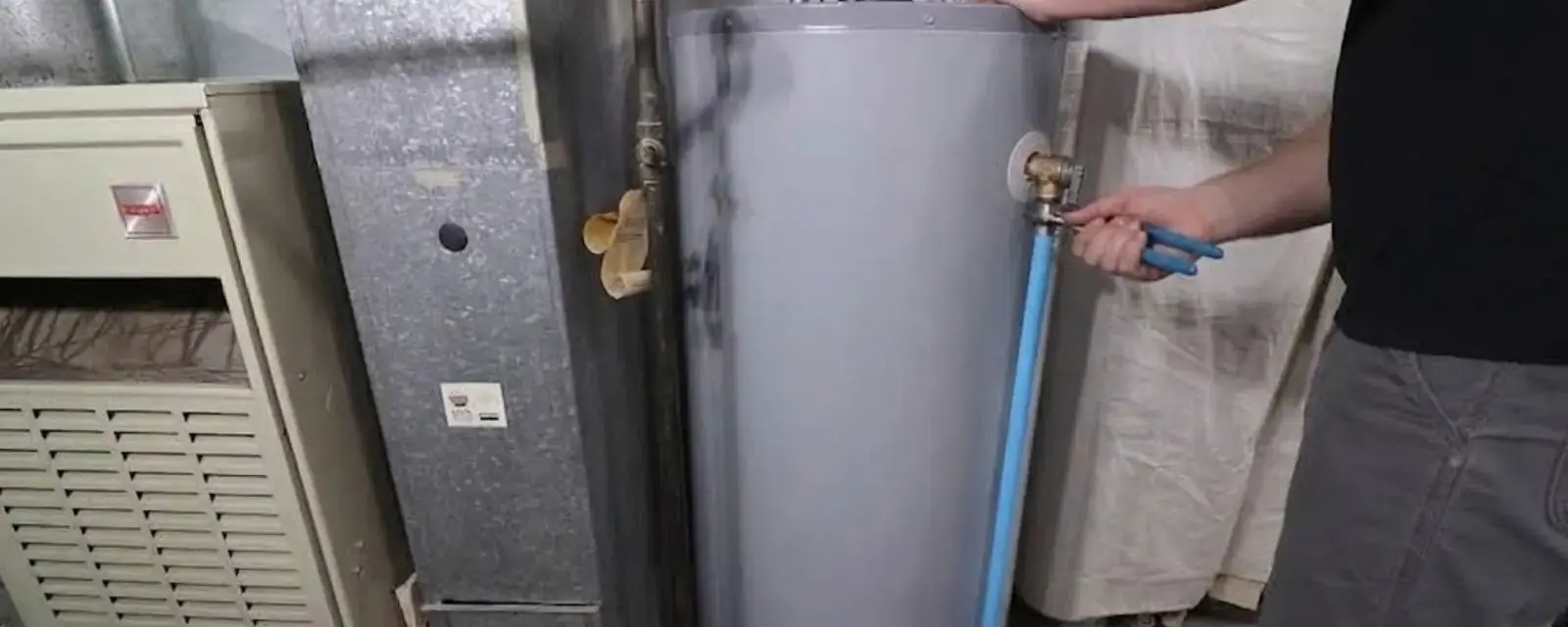
Place the tank on a level base, connect new flex lines, add the T&P valve with a discharge pipe pointed to a safe drain, and connect the vent or wiring as the manufacturer directs.
- 5
Fill, check, then power up.
Open the cold valve and a hot tap until water runs steadily. Check every joint for drips, then restore gas or power and relight the pilot or reset the breaker.
Four hazards that decide who should do the work
Most installation mistakes fall into one of these, and each one can hurt someone.
- Gas connections.
A loose joint or a missing leak test can fill a home with gas. Leak testing needs the right solution or a gauge, and it is not a guess.
- Venting and carbon monoxide.
A gas or oil heater must carry exhaust outdoors. A weak draft or a disconnected vent can push carbon monoxide into living space.
- Electrical supply.
Electric units use a dedicated circuit, and the wire size and breaker must match the nameplate. Always confirm power is off with a tester, not a switch.
- Scald and over-pressure risk.
The T&P valve exists to release unsafe pressure or temperature. Capping it, plugging it, or running its discharge pipe uphill defeats the one device meant to prevent a rupture.
What is realistic DIY and what to hire out
The honest answer depends on fuel, vent, and your comfort with tools. This table shows where most homeowners should stop.
| Task | Reasonable DIY? | Why |
|---|---|---|
| Drain a tank or flush sediment | Yes | Low risk if the power or gas is off first |
| Swap flex water lines and a shutoff valve | Often | Leaks are visible, and the main can be closed |
| Replace an electric tank with the same size and circuit | Maybe | Needs a tester and a careful read of the nameplate |
| Gas connection and pilot | No | Leak testing and combustion safety need a trained eye |
| Vent changes or a new flue | No | Poor draft and carbon monoxide are hard to spot |
| Convert gas to electric, or add a new circuit | No | Involves a new load, a new line, and code review |
Permits are a separate question, covered in the local section below.
Sizing, location, and the details people skip
Read the rating plate on the old tank before shopping. It shows fuel type, capacity in gallons, and the first-hour rating, which tells you how much hot water the unit can supply in a busy hour. A household with two showers running and a dishwasher needs a different tank from a couple living alone.
Check the clearances. Many basements and closets tuck the heater against walls, and manufacturers require space for the vent, service access, and the discharge pipe. A drain pan under the unit with a drain line is cheap insurance in a finished space.
An expansion tank on the cold line helps when the system is closed by a check valve or pressure reducing valve. Without one, thermal expansion can push pressure up every time the heater cycles.
Mistakes that bring a plumber back
Turning on the burner or element before the tank is full ruins the heating parts. Always bleed air at a hot tap until a steady stream flows. A dry element can burn out within moments.
Reusing old flex lines or a worn shutoff valve is the second-most common slip. Rubber ages and fittings corrode, and a fresh connector costs little compared with a flooded floor. Wrap threads with the right tape or compound for the joint type.
Finally, skip the lazy discharge pipe. It should run downhill to a safe drain, never be capped, and never end in a threaded fitting.
Wildwood permits and licensing: what to know locally
The City of Wildwood adopts the St. Louis County Plumbing Code, Chapter 1103 as approved in 2019, under city code section 500.060. Section 500.080 says no plumbing work may be done within the city without a permit. The city's building permits page lists new or replaced plumbing among work that needs a building permit and points questions to St. Louis County Public Works.
None of those pages states a rule specifically for water heaters, so we will not claim one. Call the Wildwood building department before you buy the unit. Ask whether your swap needs a permit and who may pull it.
An older county flyer hosted on the city's website says integrated permits cover plumbing done by a licensed Master Plumber or a qualifying homeowner. The flyer is dated, so confirm the current rule. St. Louis County licenses plumbers through its Board of Plumbing Examiners, and you can verify any plumber's license with that office.
Sources: Wildwood city code 500.060 and 500.080, City of Wildwood building permits page, St. Louis County permit flyer hosted by City of Wildwood, St. Louis County Board of Plumbing Examiners
Where a plumber pays for itself
A licensed plumber carries the tools to leak-test gas, confirm draft at the vent, and size the circuit. They also handle disposal of the old tank, which most homeowners cannot move alone. If you are replacing a failed unit in January, same-day scheduling when available matters more than saving a few hours of labor.
Our water heater replacement team handles the full swap, and our tankless water heater service covers conversions that need new venting or gas line capacity. For a planned job, call our 24/7 line and ask what the unit, vent, and permit questions look like at your address.
Homeowners in Chesterfield and Eureka ask us the same questions, since every city checks its own permit rules. Whichever address you have, get the answer from your own building office before the old tank comes out.
Not sure your setup is a safe DIY?
Describe the tank and the vent, and we will tell you plainly which parts to leave alone.
Questions we hear in Wildwood, MO
Some homeowners handle a like-for-like electric swap, but gas, venting, and new circuits belong with a licensed plumber. Wildwood city code 500.080 says no plumbing work happens in the city without a permit, so call the building department before you start.
The city's permits page says new or replaced plumbing needs a building permit, but it does not state a water heater rule on its own. Permit rules vary, so ask the building department or St. Louis County Public Works before you buy the unit. A plumber can also tell you how they handle the paperwork.
A straight swap often fits into a working half day, longer if the vent, shutoff valve, or gas line needs work. Draining and disposal take longer than most people expect. The plumber should give you a window before starting.
The temperature and pressure relief valve opens if the tank gets too hot or too pressurized. It must have a discharge pipe that points to a safe drain, never capped. Install a new valve with every new tank, as the maker directs, and never plug a dripping one.
A drip from the T&P pipe can mean thermal expansion, high house pressure, or a faulty valve. An expansion tank on a closed system often fixes the first. Call a plumber if the drip continues, because the valve is a safety device.
Missouri plumbers are licensed locally. St. Louis County licenses them through its Board of Plumbing Examiners, in the Department of Transportation and Public Works. Ask for the license holder's name and confirm it with that office before work begins.
Leave the building at once and avoid switches, lighters, and garage door openers. From a safe distance, call Spire at 800-887-4173 or 911 before you call a plumber. Stay out until a gas safety professional says it is safe.
Have a question this page did not answer? Call (855) 575-2890 at any hour and a dispatcher will talk it through.