Why does my main drain keep clogging every couple of years?
A drain that clogs, gets cabled, and clogs again two or three years later is usually coated, not just plugged. Grease, soap scum, mineral film and fine roots narrow the pipe a little each month. The cable opens a channel through the middle and leaves the wall layer behind, so the channel closes again.
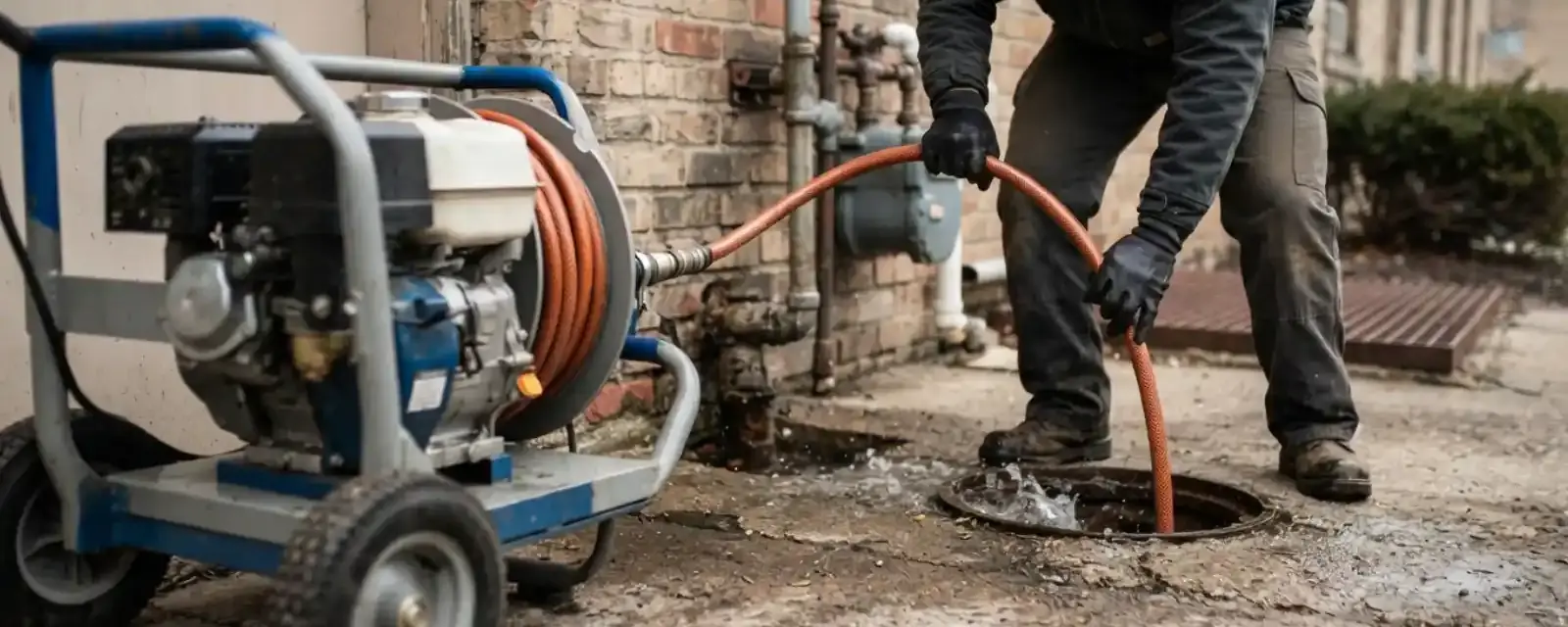
Hydro jetting is the answer to that pattern because water pressure scours the full circle of the pipe. When roots are the cause, a jetting nozzle clears the root mass from the joint and removes the fine threads a cable tends to skip. That is why homeowners who have paid for repeat cabling often ask for jetting next.
Why roots and repeat clogs are common in Wildwood
The city's Master Plan describes Wildwood as rolling and hilly woodlands of the Ozark foothills, and most lots keep trees near the house. Roots go where the moisture is, and a sewer lateral joint is a steady source of it.
Census ACS data for 2020 to 2024 puts the median Wildwood home at a 1992 build year, with about 42.8 percent of homes built before 1990. Those lots have had 30 years or more of tree growth, which is long enough for roots to reach a joint and settle in.
Older areas around Grover and Pond along Old Manchester Road add another unknown: we only call a pipe material after a camera has looked at it. A jetting visit usually includes a camera pass so you see the result.
Jet, cable or camera first? A quick way to decide
Jetting is not always the first move. This table shows how the choice usually breaks down for a Wildwood home.
| What you are seeing | Best first step | Why |
|---|---|---|
| One slow sink, no history | Cable | A local clog rarely needs more than a cable |
| Main clogs every one to three years | Hydro jetting | Removes the wall coating a cable leaves |
| Cable stalled at the same distance twice | Camera, then decide | A stall can be a root mass or a broken joint |
| Grease-heavy kitchen line | Cable, then jetting | Opens flow first, then strips the wall |
| Old or fragile pipe suspected | Camera before any pressure | Pressure can worsen a cracked or offset pipe |
| Restaurant or multi-unit line | Scheduled jetting | Regular cleaning prevents emergencies |
If the camera finds a break, we will say so before any pressure goes into the line.
How a jetting visit works
- 1
Find the access point.
We locate a cleanout, or pull a toilet when none exists, so the hose enters the line close to the problem.
- 2
Feed the nozzle in.
The hose advances with the nozzle sending water forward and back. Rear jets pull the hose along the pipe as the water works.
- 3
Pull back with full cleaning.
The real scouring happens on the return, when the water strips the wall and flushes debris toward the main or the tank.
- 4
Run a camera and flush the fixtures.
A pass with the inspection camera confirms the pipe is clear and shows what remains, such as a belly or a cracked joint.
When a backing-up line cannot wait for a scheduled jetting
Call at once if sewage or gray water is rising in a tub, shower or floor drain, or if several toilets are slow together. We dispatch around the clock for these backups, and in daytime we book same-day appointments when available for lines that are slow but not flooding.
Until the plumber arrives, stop running every fixture. Do not pour chemicals into a standing backup, because they sit above the clog and splash during the work. Move belongings off the floor and photograph the water line for your insurer or landlord.
Same drain, third clog?
Call the 24/7 line and describe how long the problem has repeated. We can plan jetting and a camera pass in one visit.
When jetting is the wrong tool
Jetting is aggressive, so it is the wrong tool for some pipes. A cracked, collapsed or badly offset line can wash out soil around the break when high-pressure water runs through it. Brittle old cast iron with heavy scale may shed in chunks that need to be collected, not flushed. If a camera shows damage, the answer is a repair, and we explain the options on our sewer line repair page.
A blockage that is a foreign object, such as a toy or a broken cable end, may need to be pulled by hand rather than pushed along. And a drain that is slow because of a vent problem or a full septic tank will not improve with water pressure at all.
Jetting a home on septic or a package plant
Many Wildwood homes, especially west of Highway 109, are not on public sewer, and the city's Master Plan notes that soils in much of the city are unsuitable for individual septic systems. On a private system we jet the line from the house to the tank and stop there, because pushing a lot of water into the tank and field can stir solids and overload them.
Skip caustic drain products on any septic or shared plant. They can harm the bacteria that digest waste, and the dose passes into a field or plant not built for it.
Jetting for landlords, restaurants and busy households
A line that serves several bathrooms, a rental or a commercial kitchen builds coating faster than a single-family drain. Scheduled jetting every year or two can cost less than one weekend backup and the cleanup that follows. For restaurants and shops at places like Wildwood Town Center, our commercial plumbing team handles grease and drain schedules.
If jetting does not hold, a basic drain cleaning visit with a cable may be enough for the branch lines, while the main gets the pressure treatment. We help you pick the cheaper split.
What affects the price of hydro jetting
Jetting costs more than a basic cable because of the equipment and time. We give you a clear price before work starts.
A short branch is quick, while a long main with a four-inch pipe takes longer and uses more water.
Thick roots or hard scale need slower passes than a light grease coating.
A clean outside cleanout is the simplest case. Pulling a toilet to reach the line adds time.
A before and after camera pass adds time and gives you a record of the pipe.
After-hours dispatch differs from a same-day daytime visit, and you hear the difference before you agree.
Insurance seldom covers jetting a line that clogged from slow buildup. A sudden backup that damaged flooring may be covered only with a water backup endorsement, and your policy decides.
To price your specific line, call the 24/7 number and tell us the symptoms.
Serving Wildwood and nearby
We serve homes across Wildwood and the neighboring towns of Chesterfield and Eureka. Whatever the address, the first questions are the same: how often the drain clogs, where the cable stalled, and whether the line goes to a public sewer, a private tank or a shared plant.
Questions we hear in Wildwood, MO
Yes. Our 24/7 line dispatches for backing-up main drains, overflowing floor drains and multiple clogged fixtures at any hour. For a slow line with no water on the floor, we book a same-day appointment when available.
Call the emergency line and tell us which fixtures are affected.
A cable cuts a channel through a clog and leaves the coating on the pipe wall. Grease, scale and fine roots rebuild the blockage, usually within a few years. Jetting scours the wall, and a camera shows whether a root mass or a damaged joint is the real cause.
On sound pipe it does not. On cracked, collapsed or badly offset pipe, pressure can make the damage worse, which is why we run a camera before pressure when the line is old or the cable has stalled. If the camera shows a break, we stop and explain the repair.
We jet the line between the house and the tank, not the tank or the drain field. Pushing large volumes of water into a private system can overload it. Avoid caustic drain products as well, since they can harm the bacteria in the tank.
There is no single schedule. A home that has clogged twice in five years may only need jetting after the next problem, while a rental or restaurant line may do better on a yearly plan. Tell us the history and we will suggest one.
The time depends on the length of the line, the buildup and the access. Setup, the jetting passes and a camera check all take part of the visit, and we give you an expected time before we start.
Have a question this page did not answer? Call (855) 575-2890 at any hour and a dispatcher will talk it through.