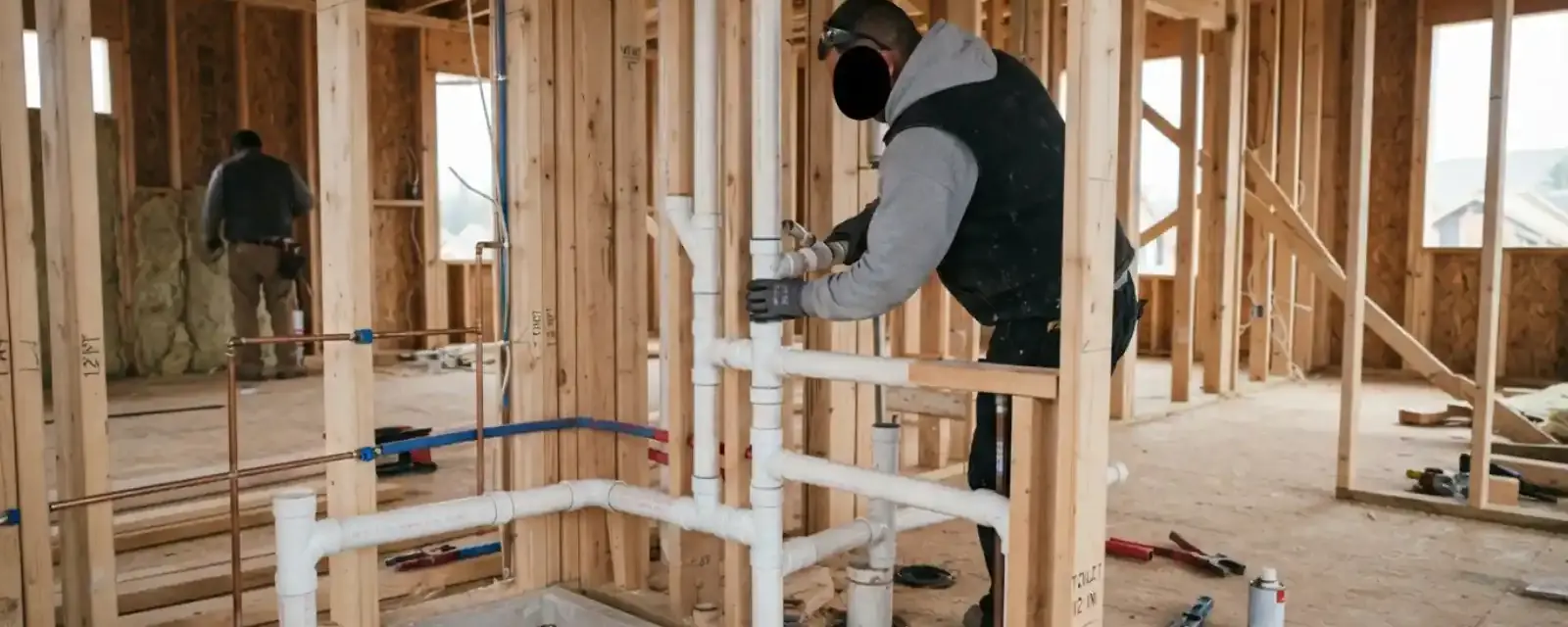
What a plumber installs in a Wildwood house
These are the jobs that come up most often in remodels and additions.
- Kitchen and bar sinks.
New supply stops, drain, trap and vent, plus disposal and dishwasher connections when they come with the sink.
- Bathrooms and showers.
Toilets, vanities, tubs, shower valves and drains, including a rough-in for a basement bath.
- Laundry hookups.
Washer supply valves and a standpipe drain sized for the machine, which is a common fix for a missing or damaged connection.
- Outdoor faucets and irrigation tie-ins.
Frost-resistant spigots and a protected tie-in for sprinklers, with the backflow device the system needs.
- Drain and vent corrections.
Replacing an old S-trap with a properly vented P-trap so the fixture drains and the trap seal stays put.
- Appliance lines.
Refrigerator ice-maker supply, water softener loops and dedicated shutoffs.
Planning questions that settle most installations
Start with the fixture and the location. Water needs supply, and waste needs a drain that slopes downhill to the main stack or the sewer lateral. If the new fixture sits below the drain line, as in a basement bath, the plan may need a sewage ejector pump, which is a different design from a gravity drain.
Ask three other questions before you buy fixtures. Is there a vent path for the drain? Will the existing supply pipe handle another fixture? And where does the waste go, a public sewer or a private system? Fixtures bought before the rough-in is planned are the most common source of returns and delays.
Common installs and what each one needs
Different jobs bring different requirements. This table covers the usual ones.
| Installation | Main requirements | Often overlooked |
|---|---|---|
| Basement bathroom | Drain slope or ejector, vent, supply, floor access | Where the drain line sits relative to the floor |
| Kitchen sink and disposal | Supply stops, trap, vent, electrical for the disposal | Dishwasher drain loop or air gap |
| Washer hookup | Hot and cold valves, standpipe, trap | Overflow path if the drain backs up |
| Outdoor spigot | Supply tap, shutoff, vacuum breaker | Winter shutoff access |
| Irrigation tie-in | Branch, shutoff, backflow assembly | Annual backflow test |
| Gas appliance hookup | Licensed gas piping and shutoff | Leak check before use |
Gas work has strict safety steps. If you smell gas at any time, see the FAQ below before calling anyone.
Planning a remodel?
Tell us the rooms, the fixtures and the timeline, and we will advise on rough-in order and scheduling. Same-day visits are possible when available.
New construction plumbing: the permit trail
For a new home or addition in Wildwood, plumbing follows the building permit process. The city's building permit page lists new or replaced plumbing among work that needs a building permit. St. Louis County reviews, issues and inspects plumbing permits, and the city adds zoning authorization. The work falls under the St. Louis County Plumbing Code, Chapter 1103, adopted by the county in 2019 and by the city in section 500.060 of its code.
Sewer is part of the plan. Section 510.080 of the city code says buildings with plumbing shall connect to a public sewer if one is available, and a sewer counts as available when a sanitary sewer line is within 200 feet. Where it is not, the Master Plan describes small package plants serving subdivisions and individual systems on large lots. Ask the building department which applies to your lot before you finalize a bathroom count.
A builder or general contractor coordinates rough-in and final inspections. We work with builders on supply, drain and vent rough-in and ask the inspector which stages must be signed off before walls close.
Backflow testing and prevention devices
A backflow preventer is a valve assembly that keeps water, or anything in it, from flowing backward into the drinking supply. You find them on lawn sprinkler systems, fire sprinkler feeds, some commercial equipment and certain boiler or process lines. A failed check valve can let contaminated water siphon into the house system, which is why these devices are tested.
A test uses a gauge kit to check that the valves close tightly and the relief valve opens when it should. Some water providers ask for a test every year and some require the result to be filed. Ask your water utility whether your device needs testing, how often, and who may perform it.
If the test fails, the usual fix is a rebuild kit for the check valves or replacing the assembly. We test, repair and report. For irrigation systems, the device sits between the house and the sprinkler lines, which is also where a freeze can crack the body, so a spring check after winter is smart.
Sewer, septic and wells: what changes the install
Many homes, especially west of State Route 109, are not on public sewer, and some are on private wells. On public sewer, a new bathroom ties into the existing drain system. On a private system, every added fixture adds load, so check the capacity before you commit to a larger bath or a second laundry.
On a well, extra fixtures can change how often the pump cycles, and the pressure tank may need attention. We can plan around it, but we suggest asking the county health office or your system installer about capacity before adding a bathroom to a septic-served home.
How an installation job moves from call to final check
- 1
Scope the job.
We walk the space, look at existing supply and drain locations and note walls, floors and ceilings that must be opened.
- 2
Plan the fixtures.
We confirm fixture sizes, vent paths and any pump or backflow device, then give a clear price before work starts.
- 3
Rough-in.
Supply, drain and vent lines go in before the walls close, and we arrange required inspections.
- 4
Set fixtures.
Fixtures, valves and trim are installed and leak tested at working pressure.
- 5
Final check.
We run every fixture, check the drains and give you shutoff locations and care notes.
What affects the price of a plumbing installation
Installation prices depend on the layout more than the fixture. You receive a clear price before work starts.
A fixture near an existing stack costs less than one at the far end of the house.
Open framing is faster than concrete cutting or finished walls.
Basic and designer fixtures differ in materials and in the labor to set them.
Permit fees, plan review and inspection time are separate costs that vary by project.
Ejector pumps, backflow assemblies and pressure regulators add parts and labor.
Planned installations are normally paid by the homeowner. If a new line fails and damages the house, your policy decides what is covered, and rules about permits and licensed work can matter to a claim.
For a number on your project, call us with the room, the fixtures and the date you need it done.
Related planning pages
If your project includes a new tank or tankless heater, see tankless water heater planning, and if you are replacing old pipe along the way, read about repiping first. We schedule installs across western St. Louis County, including homes in Chesterfield.
Questions we hear in Wildwood, MO
The city's building permit page lists new or replaced plumbing as needing a building permit. St. Louis County reviews, issues and inspects plumbing permits, and the city adds zoning authorization. Permit rules vary by project, so ask the building department what yours needs.
No. Leave the building right away and go where you cannot smell gas. Do not use light switches, garage door openers or alarms on the way out. From a safe place, call Spire's 24/7 emergency line at 800-887-4173 or 911. Call a plumber only after the gas utility says it is safe.
It is a gauge test of a backflow preventer, the valve assembly on sprinkler and some commercial lines that stops water flowing backward into the drinking supply. Ask your water utility whether your device needs a yearly test.
Often yes, but it depends on where your drain line sits and whether the home is on public sewer or a private system. If the fixture is below the drain, an ejector pump may be needed. We check this before you buy fixtures.
Yes. We do supply, drain and vent rough-in and fixture set for builders and owner-builders. Permit and zoning steps run through St. Louis County and the city, so schedule them early.
Missouri plumbers are licensed locally. For St. Louis County, check with the Board of Plumbing Examiners in the Department of Transportation and Public Works, Plumbing Licensing. Ask any plumber for their license before work starts.
Have a question this page did not answer? Call (855) 575-2890 at any hour and a dispatcher will talk it through.