Why does my water bill keep climbing?
A bill that rises with no change in habits usually means water is leaving the system somewhere you are not looking. The usual suspects are a toilet flapper that leaks into the bowl, a softener or water heater connection that weeps, a sprinkler zone stuck open, or a pipe under the house that has lost a joint.
Many people first notice a leak on the Missouri American Water bill instead of on a floor. Your account shows usage history, so compare this month with the same month last year before you assume anything. If the gap is large and nobody has been home more, a leak search is the next logical step.
Reading your water meter: the two-minute leak check
Shut off every tap, the dishwasher, the washer and the ice maker, then find the meter in the yard box or in the basement. Most meters have a small low-flow indicator, often a triangle or a thin dial, that spins whenever any water moves. If it keeps turning with everything off, water is leaking somewhere on your side of the meter.
Next, close the main shutoff inside the house and look again. If the indicator stops, the leak is inside the building. If it keeps moving, the loss is on the buried line between the meter and the house, which is a different repair and a different search.
Write down the reading, wait an hour with no water used, and read it again. That single number gives us a starting point and tells you whether a toilet or a buried line is the likelier cause. A toilet check takes five minutes: add a few drops of food coloring to the tank and see whether color shows up in the bowl without flushing.
Signs a leak is hiding in your house
These are the symptoms that most often turn out to be a concealed supply or drain leak.
- Meter moves with everything off.
The clearest sign. It rules out normal use and points to a leak before or after the main shutoff.
- Sound of running water at night.
A faint hiss or trickle in a quiet house often comes from a pressurized line behind drywall or under a floor.
- Warm spot on a floor.
A patch of floor that feels warmer than the rest can mean a hot water line is leaking beneath it.
- Musty smell with no visible water.
Damp insulation, subfloor or drywall holds odor long before a stain appears.
- Paint bubbling or a soft baseboard.
Moisture traveling inside a wall lifts paint and swells trim from the back.
- Low pressure that came on gradually.
A slow loss of pressure at several fixtures can follow a growing leak on the supply side.
- Unexpected green patch in the yard.
One lush, soggy strip over the line from the meter to the house is a classic buried-leak marker.
Water where it should not be?
If the meter is running or a ceiling is dripping, tell us what you see and we will line up a visit today when available.
When a hidden leak is an emergency
Treat it as urgent if water is coming through a ceiling, pooling near the electrical panel, soaking a finished basement, or running at a rate you cannot slow. Every hour a wall stays wet raises the odds of swollen framing and mold, and wet insulation will not dry on its own. Our dispatch line runs 24/7, and after-hours calls are answered by licensed plumbers.
Before we arrive, shut off the main valve, open a low faucet to drain the lines, and switch off the water heater if the leak is near it. Do not touch outlets or switches in a wet room. If a ceiling is bulging, poke a small hole with a screwdriver over a bucket to relieve the water, and stay out from under it.
Which tool finds which kind of leak
No single device finds every leak. We choose by the symptom, the pipe material and what lies between the leak and the surface.
| Tool | What it does | Best for |
|---|---|---|
| Meter and pressure test | Isolates a section of pipe and watches for pressure loss | Confirming a leak exists and which side of the house |
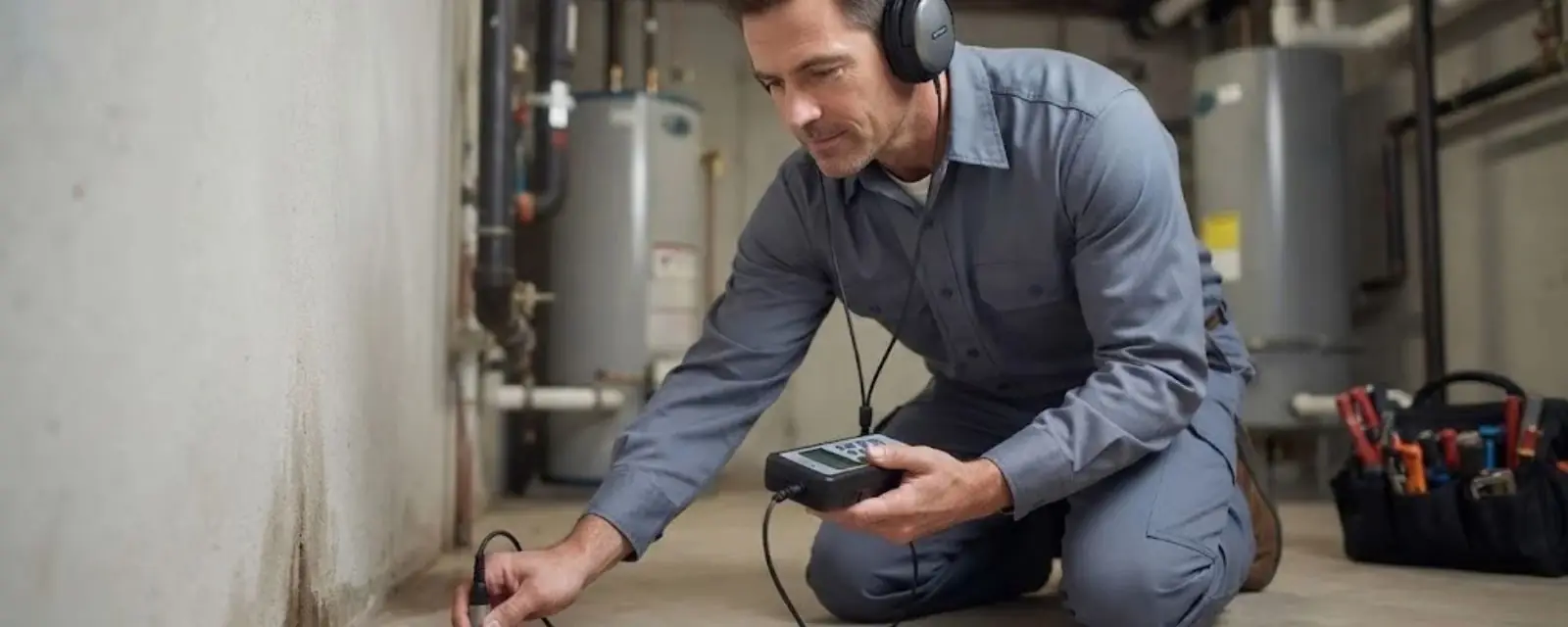
| Acoustic listening | Picks up the hiss of escaping water through the pipe or the ground | Pressurized lines under floors, slabs and yards |
| Thermal imaging | Shows temperature differences behind surfaces | Wet drywall, ceilings and radiant or hot water lines |
| Moisture meter | Reads dampness in wood, drywall and masonry | Mapping the wet area after a leak is suspected |
| Tracer gas | Releases a harmless gas mix into the pipe and sniffs where it escapes | Quiet leaks, plastic pipe and deep lines |
| Camera | Looks inside drain and sewer lines | Leaks on the drain side, not the supply side |
Thermal imaging shows where something is cold or warm. It does not prove water is present, so we confirm with a second method.
Basement and crawlspace leaks
Most homes in Wildwood sit over a basement or a crawlspace, and that is a gift for leak detection. Supply and drain lines run exposed along joists, so a damp subfloor, a mineral trail down a copper pipe or a drip from a fitting can often be seen from below without opening anything.
Look for rust on joist hangers, stained insulation and a musty smell near the water heater, the softener or the washer hookup. Then trace the wet spot upward, because water travels along pipe and framing before it drips. The place it lands is often several feet from where it started.
Crawlspaces add a wrinkle: poor ventilation hides the problem. If moisture stays high under the house, we check supply lines, drain joints and the condensate from any air handler before anyone blames the soil.
Slab leaks: less common here, but real
A slab leak is a break in a pipe that runs in or under a concrete floor. Slab-on-grade construction is a smaller share of Wildwood homes than basement and crawlspace houses, but garages, additions, sunrooms and some lower levels sit on concrete, and pipes can run through them.
The signs are a warm patch on the floor, a meter that runs with the house quiet, the sound of water under the slab, or a damp edge where the slab meets the wall. Acoustic listening and thermal imaging usually narrow the area, and then a pressure test on the suspect line confirms it.
Repair options range from breaking the slab over the leak, to rerouting the line through walls or the attic, to lining or replacing the section. Each one trades cost against disruption, and we explain both before work begins.
Ceiling and wall leaks
A brown ring on a ceiling is a clue, not a location. Water can run along a joist for six feet or more before it finds a place to drip. A stain below a bathroom might come from a shower valve, a supply line, a tub drain or a roof problem that has nothing to do with plumbing.
We start with a moisture meter and a thermal image to map the wet area. Then we isolate the plumbing, shut off one branch at a time, and watch the meter. If the leak stops when a branch is off, we have the right line. If it does not, the source may be the roof or the HVAC condensate, and we will say so instead of cutting into drywall for no reason.
Cut access holes small and place them over framing where possible. A neat patch costs far less than a repaired wall.
Buried lines on a hillside lot
The city's Master Plan describes the area as rolling and hilly woodland with steep terrain and soils sensitive to erosion. That matters for buried pipe. On a slope, a leaking line can wash soil away from itself and travel downhill, so the soggy patch may sit well away from the break.
It also means a leak can be self-masking. Water runs along a trench or a stone layer and surfaces at a low point near a retaining wall or a driveway edge. If you see a new wet strip, a sunken patch of lawn or a puddle on a dry day, mark it and keep a photo. We use acoustic listening along the line, then confirm with a pressure test or tracer gas, and only then recommend where to dig.
How a leak search runs
- 1
Talk through the symptom.
We ask where the water shows up, when the bill changed and what you have already shut off.
- 2
Isolate the system.
Close the main, read the meter, then test branches so we know whether the leak is on the supply or drain side and inside or outside the house.
- 3
Pinpoint with the right tool.
Listening gear, thermal imaging, moisture meters or tracer gas narrow the spot to a few feet, depending on the pipe.
- 4
Confirm before cutting.
A second method or a pressure test backs up the first reading so the opening is small and in the right place.
- 5
Review the repair options.
You hear the repair choices and the price before any wall, slab or yard is opened.
Sprinkler and irrigation leaks
A stuck valve or a cracked lateral in a lawn sprinkler system can add a surprising amount of water to a bill without leaving a wet spot you would notice. Run each zone for a minute and watch for geysers, soft ground and low pressure at the heads. Isolating the irrigation branch from the house supply is the quickest way to tell whether the meter loss is yours to find in the yard.
Yard, meter box and pool lines
Leaks at the meter box are common because that is where several fittings meet. If you see water standing in the box, call Missouri American Water before touching anything, and ask where its responsibility ends. For pool and spa plumbing, we can pressure test the supply and return lines, but we leave liner and shell leaks to pool specialists.
What affects the price of leak detection
The price depends on how hard the leak is to reach and how many tools it takes to confirm it. We give a clear price before work starts, and we do not guess.
A visible pipe in a basement ceiling takes far less time than a line under a driveway or inside a finished wall.
Copper, PEX, plastic and old steel respond differently to listening gear, so some jobs need tracer gas.
A single bathroom is quick. A whole house with a running meter and no visible clue takes longer.
Locked crawlspaces, finished basements and slopes with heavy brush add set-up time.
Locating a leak is one price. Fixing it is another, and we quote it separately once the spot is known.
Sudden and accidental water damage is often covered, but wear, corrosion and slow seepage over time are often not, and some policies cover the water damage but not the cost of finding the leak. Your policy decides, so read it or ask your agent before the visit, and keep photos and the meter readings.
For a real number on your leak, call our 24/7 line and describe what you see.
Related repairs once the leak is found
A leak found on the buried line becomes a service line repair, and a pipe that has already split goes to burst pipe repair. If the search shows a house full of failing fittings, a repiping plan may be cheaper than patching one spot at a time.
Wildwood stretches from Lake Chesterfield to the Meramec River, and our dispatch covers the whole city and the nearby towns, including Chesterfield, around the clock.
Questions we hear in Wildwood, MO
Yes. Our dispatch line is open 24/7, including nights, weekends and holidays, and same-day appointments are offered when available. While you wait, shut off the main valve, open a low faucet to drain the lines and keep people away from wet electrical areas.
Run the meter check: turn everything off, then watch the low-flow indicator. If it moves, you have a leak. Compare this month with the same month last year, and ask Missouri American Water for your usage history. Then call us to find where the water is going.
We combine a pressure test, acoustic listening, thermal imaging and moisture meters to narrow the location. When needed, tracer gas helps on quiet lines. We confirm with a second method before any opening is made, and we keep it small.
Less than in slab-heavy regions, because most homes here have basements or crawlspaces. Garages, additions and lower levels can still have pipes in or under concrete. If the meter runs with the house quiet and there is a warm floor patch, ask for a slab check.
It depends on where the leak is. Water that keeps flowing after you close the house main points to the line between the meter and the house. Ask Missouri American Water where its responsibility ends, since it varies by account and location.
Sometimes. Many policies cover sudden damage but not gradual leaks or the cost of locating the source, and some pay for access to the leak. Your policy decides. Take photos, save the bill and ask your agent before the visit.
Yes. On a sloped lot, water can travel along a trench or soil layer and appear far from the break. A pressure test and acoustic listening along the line find leaks that never surface.
Have a question this page did not answer? Call (855) 575-2890 at any hour and a dispatcher will talk it through.