Why is there water in my basement after it rains?
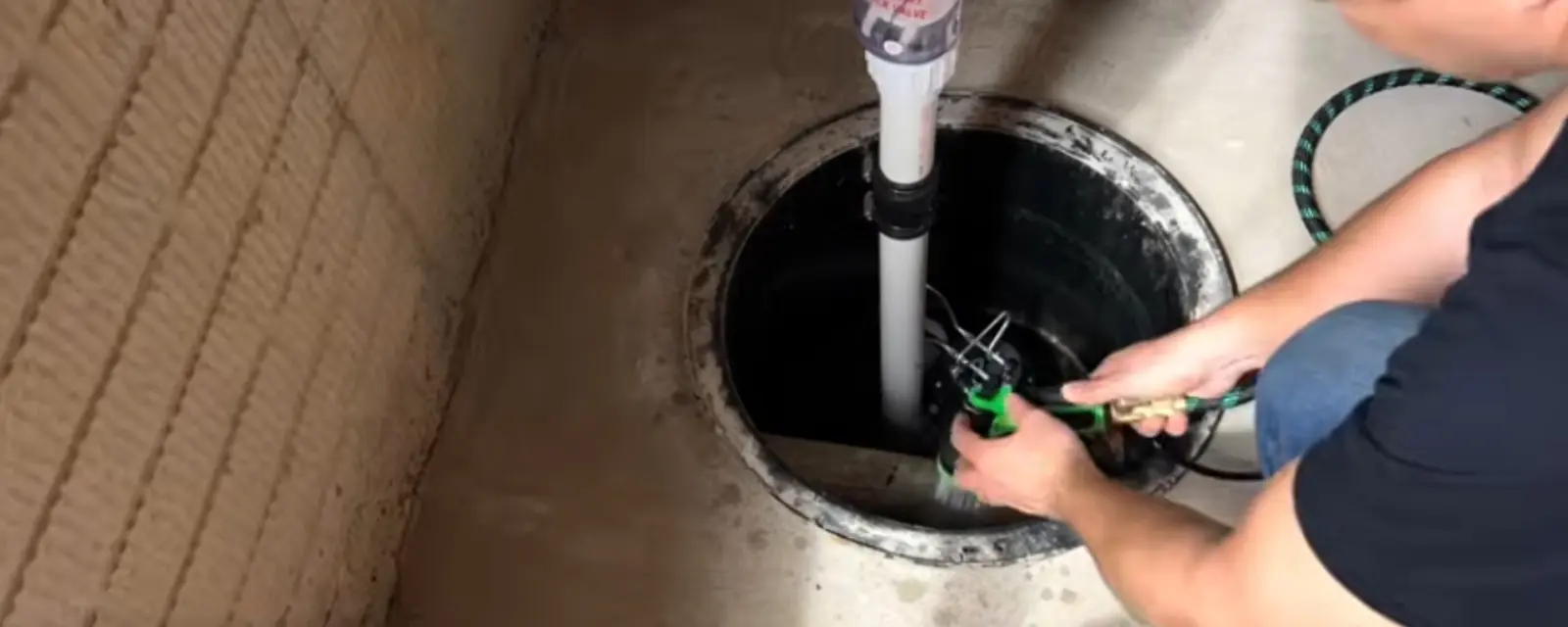
Groundwater rises when the soil around a foundation is saturated, and it looks for the lowest path. That path is often the joint where the wall meets the floor, a drain inlet, or a floor crack. A sump pump sits in a pit at the low point, collects that water, and pushes it out through a pipe before it spreads.
If the pit is dry and water comes in anyway, the pit is in the wrong place or the home has no pump. If the pit fills and the pump does not start, the pump, float switch or power is at fault. If the pump runs constantly, it may be undersized or the check valve is failing.
A basement leak is not always groundwater. Roof gutters, a downspout dumping beside the house, or a leaking pipe can look the same. Our leak detection page explains how we separate a plumbing leak from rain and soil water.
When a sump pump failure is an emergency
Call right away if the pump will not start while the pit is filling, if water is already on the floor, or if the pump runs and the pit keeps rising. Check the cord and the breaker or GFCI outlet first, and make sure the discharge pipe outside is not frozen or blocked.
Do not walk through standing water near electrical equipment, and do not try to lift a pump with the power on. Move boxes, rugs and electronics to higher ground, and photograph the water level and damage for your insurer. Your policy decides what is covered, and sump failures are sometimes treated differently from other water losses.
Storm calls can pile up, but we staff the 24/7 line for exactly these nights. Same-day appointments are offered when available, and we will tell you plainly if we cannot reach you quickly.
Wildwood's hills, soils and rainfall
The city's Master Plan describes Wildwood as rolling and hilly woodlands of the Ozark Foothills, with steep terrain and soils sensitive to erosion. Manchester Road follows the ridge line that separates drainage to the Meramec River on the south from the Missouri River on the north. Missouri Department of Conservation describes Rockwoods Reservation as Ozark-style terrain with springs, caves and rock formations.
What this means for a homeowner: water moves downhill in Wildwood, and a house cut into a slope can sit uphill or downhill of where rain concentrates. Fill soil around a newer foundation may settle and let water run toward the wall. We cannot read your lot from a distance, so ask us to look at where the pit sits and how the yard drains.
For rainfall, the National Weather Service lists a normal of 41.70 inches a year at its St. Louis station. That is the St. Louis figure, not a Wildwood gauge, but it shows why a pump may run often in wet seasons.
Sump pump problems and what they usually mean
Most failures follow a few patterns. This is how we read them.
| Symptom | Likely cause | What we do |
|---|---|---|
| Pump hums but does not pump | Seized motor or clogged impeller | Clean it or replace the pump |
| Pump never turns on | Stuck float, tripped GFCI or dead switch | Reset power, free the float, replace the switch |
| Runs constantly | Stuck float, failed check valve or high water | Adjust or replace parts, check discharge |
| Loud banging after shutoff | Check valve slams as water drains back | Replace the check valve |
| Pit overflows | Pump too small or discharge blocked | Upsize, clear the line |
| Pump is old and unreliable | Wear on the motor and switch | Replace before the next storm |
Test your pump each spring by pouring a bucket of water into the pit and watching it start.
Pump silent and the pit filling?
Call the 24/7 line now. We can troubleshoot the power and float by phone while a plumber is on the way.
Installing a new sump pump or pit
A new installation means cutting into the slab, setting a basin, adding a pump with a float switch and check valve, and running a discharge line outside. Where the water goes matters. It should discharge away from the foundation and not toward a neighbor, and never into the sanitary sewer.
Sizing depends on how fast water enters the pit. Cast-iron pumps tend to run cooler and longer, while thermoplastic ones cost less. A submersible pump sits in the pit and runs quieter than a pedestal pump, which sits on top.
Permit rules vary, so ask the building department before cutting the slab or changing the discharge. St. Louis County Plumbing Code, Chapter 1103, as adopted by the City of Wildwood, governs the plumbing portion.
Battery backup and storm power loss
A pump needs electricity, and storms cut electricity. A backup is the answer.
- Battery backup pump.
A second pump runs on a deep-cycle battery when the power goes out. It has a limited run time, so it is a bridge, not a generator.
- Water-powered backup.
Some systems use municipal water pressure to run a pump. They need adequate pressure, and homes on private wells are not suited to them.
- Alarm.
A high-water alarm tells you before the pit overflows. It is inexpensive and worth adding.
- Battery care.
Batteries wear out in a few years. Test and replace on schedule, or the backup fails when you need it.
Sewage ejectors and basement bathrooms
A sewage ejector is a different pump. It lifts wastewater from a basement bathroom or laundry up to the main drain, and it needs a sealed, vented pit. Do not mix it up with a sump pump, which handles groundwater.
What affects the price of sump pump work
A float swap and a full basin installation are very different jobs. These factors drive the price.
A float switch costs less than a new pump, and a new basin costs more.
Larger or cast-iron pumps cost more than basic ones.
Breaking concrete and running a long discharge line add labor.
A battery or water-powered backup adds equipment.
Storm-night calls cost more than scheduled visits.
Many standard homeowner policies exclude groundwater and sump pump overflow unless an endorsement is added, and flood damage is usually a separate policy. Your policy decides what is covered.
For a clear price before work starts, call the 24/7 line and tell us how the pump is failing.
What a sump pump visit involves
- 1
Check power and float.
We confirm the outlet, the cord and whether the float lifts freely.
- 2
Test the pump and check valve.
We fill the pit with water and watch the pump cycle and the discharge.
- 3
Quote.
You see a clear price before work starts for repair or replacement.
- 4
Replace and retest.
We install the new parts, reseal the lid and run the pump again.
Questions we hear in Wildwood, MO
Yes. The line is open 24/7, including during storms. We prioritize calls with water on the floor, and same-day appointments are offered when available.
It may be undersized, the discharge may be blocked, or the water may come from a pipe or from above ground. We check the pit, the discharge and nearby plumbing.
It depends on use and quality. A pump that runs often wears out sooner. If yours is old, loud or cycles oddly, replace it before storm season.
Only when water enters at a collectible point. Cracks and wall seepage are separate problems, and our basement waterproofing page explains the plumbing side and its limits.
If your basement floods when power fails, yes. Storm outages often come with heavy rain, which is when the pump is needed most.
Outside, away from the foundation and not into the sanitary sewer. Ask the building department about local rules.
Yes. We serve nearby towns, including Eureka and Ellisville.
Have a question this page did not answer? Call (855) 575-2890 at any hour and a dispatcher will talk it through.