Most Wildwood houses do not need a repipe
A repipe replaces most or all of the supply lines inside a house, the pipes that carry water to sinks, showers and appliances. It makes sense when the pipe itself is failing, not when a single fitting leaks or a faucet drips. One leak in a copper line or one failed connection is usually a spot repair.
The decision comes down to pipe material and pattern. A house with repeated leaks in different spots, discolored water or low pressure from corroded pipe is a candidate. A house with a single leak, original copper in good shape or newer PEX is not.
Does your house need a repipe or a repair?
Match what you see to the row. Only the rows near the bottom justify the larger job.
| What you find | Likely meaning | Usual answer |
|---|---|---|
| One leak at a fitting or valve | Isolated failure | Spot repair |
| One pinhole in a copper pipe | Could be local, could be early | Repair, then watch for more |
| Several pinhole leaks in different rooms | Pipe wall is thinning throughout | Talk to a plumber about repiping |
| Brown or orange water from many taps, low flow | Galvanized steel corroding inside | Repipe is likely |
| Gray flexible plastic pipe called polybutylene | Material with a history of failing at fittings | Have it evaluated, replacement is often advised |
| Leak behind a wall in a home with newer PEX or copper | Installation or fitting issue | Targeted repair |
What affects the price to repipe water lines
Every repipe quote rests on these five things. Know them before you compare numbers.
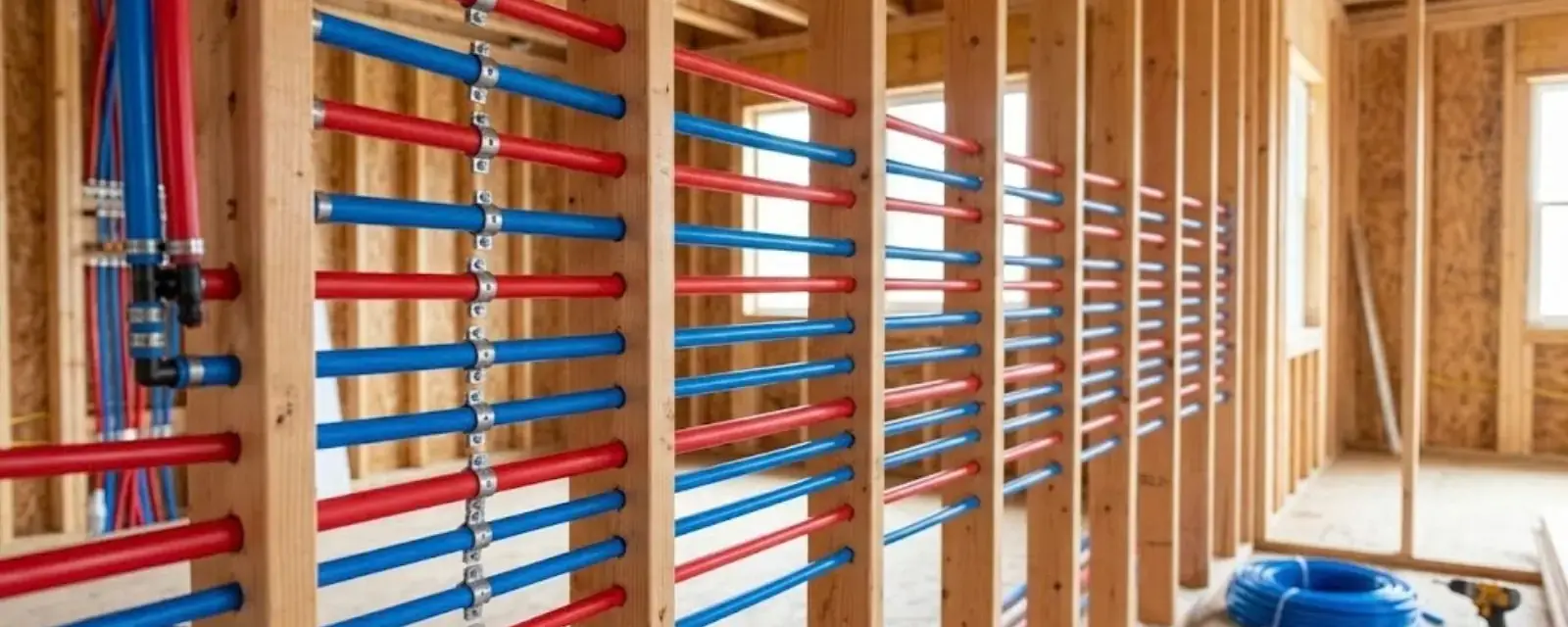
PEX is flexible and quick to run, copper is rigid and takes more labor and material, and the price gap between them depends on the home and market at the time.
More bathrooms, fixtures and floors mean more pipe and more connections. A long run to a second-floor bath costs more than a short run to a slab-side kitchen.
If pipes run through finished walls, drywall must be opened, then patched and painted. Open basements and crawlspaces keep that work low.
Old shutoff valves, fixture supply lines and sometimes the water heater connection are replaced at the same time, since you will not want to open walls twice.
Replaced plumbing needs a permit through the city and county process, and a licensed plumber normally pulls it. Your price should name who handles it.
Sudden bursts and the water damage they cause are often covered under a homeowner policy, but a repipe to replace aging or corroded pipe usually is not, and gradual leaks often are excluded. Your policy decides what is covered, so ask your agent before work begins.
Because the price depends on your pipe and your walls, call our 24/7 line and we will go through the factors for a real number.
How to tell what pipe is in your house
You can learn a lot in ten minutes near the water heater, the meter and under the kitchen sink.
- Copper.
Reddish-brown metal, hard, with soldered joints. Green crust at a joint is corrosion.
- Galvanized steel.
Dull gray metal with threaded joints. A magnet sticks to it, and it often feels rough inside when cut open.
- PEX.
Flexible plastic in red, blue or white, with metal or plastic crimp rings at connections.
- Polybutylene.
Gray, bluish or black flexible plastic with a plastic or metal ring fitting. If you find it, ask a plumber to check it.
- CPVC.
Rigid cream or light yellow plastic, glued at joints, often on hot and cold lines.
- Mixed pipe.
Many houses have more than one material. A repair near an old section may need a transition fitting.
What happens on a repipe job
- 1
Survey and plan.
The plumber traces each line from the meter and heater to every fixture, decides where walls must be opened, and chooses the new routes.
- 2
Shut off and drain.
Water to the house is turned off and the lines are drained, so you will have no water during the main work.
- 3
Run new lines.
New pipe goes in through attics, basements and wall cavities, and old pipe is capped or removed where it is easy to reach.
- 4
Pressure test and permit inspection.
The lines are tested for leaks and the work is inspected as the permit requires.
- 5
Patch and flush.
Wall openings are patched, fixtures reconnected and the system flushed. Painting and finish repair are often separate.
Wildwood housing age: what to know locally
Census Bureau data for 2020 to 2024 shows a median build year of 1992 for Wildwood housing. Of 13,391 housing units, about 42.8 percent were built before 1990, about 6.8 percent (910 homes) before 1970, and 273 in 1939 or earlier. The city's Master Plan says western St. Louis County stayed rural until the late 1970s, when its first new subdivisions were approved.
In plain terms, most Wildwood homes were built long after galvanized steel supply pipe fell out of common use. The pre-1970 group is where steel and original copper are most likely to be tired. The city lists 11 historic communities, including Grover and Pond, so older housing is more likely there than in 1990s subdivisions, though we cannot name a street. A 1992 home is a different case, and a plumber's inspection answers it.
For comparison, Ballwin has a median build year of 1973, so the older pipe question comes up there more often. See also Chesterfield if you are comparing neighborhoods. The city lists new or replaced plumbing as needing a permit through St. Louis County, so ask the building department about your job.
Sources: Census Bureau American Community Survey, city master plan, city website, city code
Alternatives that cost less than a full repipe
If one wall holds the failing section, a partial repipe replaces just that run. Some homes can swap the main supply to a new pressure-regulated line and leave good branch pipes alone. Leak repair with a pressure test, plus a plan to watch for more, is the cheapest route when the damage is local.
Our repiping service page describes how we scope a job, and leak detection can find a hidden leak before you open walls. If the leak is outside the house, that is a water line repair, not a repipe.
Want a straight answer on your pipes?
Tell us the age of the house, the pipe you see and what the water does, and we will say if a repipe is needed.
Questions we hear in Wildwood, MO
It depends on pipe material, the number of bathrooms, wall access and permit work. We give a clear price before work starts after we see the house. A one-story home with open access costs less to repipe than a finished two-story.
Age alone is not a reason. Check for repeated leaks, discolored water, low pressure and any gray flexible plastic pipe. If none of those show up, your 1990s plumbing is probably a repair-as-needed case, and a plumber can confirm the pipe material in a short visit.
Repeated pinhole leaks in different spots, rusty or brown water from galvanized steel, and polybutylene are the usual triggers.
Both are accepted. PEX is quicker to install and cheaper in many cases, copper is rigid and long-lived. The choice depends on the house, your budget and what your plumber recommends.
Many houses take a few days from shutoff to patching, depending on size and access. You will be without water for part of that time, and we plan the work so you know when.
Usually not for worn or corroded pipe, though sudden burst damage may be covered. Your policy decides, so ask your agent first.
Only a small share is. Census data shows 910 of 13,391 homes were built before 1970, so galvanized supply is mostly a question for the older historic areas, not the 1990s subdivisions.
Have a question this page did not answer? Call (855) 575-2890 at any hour and a dispatcher will talk it through.